

Now publish Press Release on Arkania for $10
A curated selection of the most impactful crypto stories, market movements, and emerging trends shaping the industry right now. Stay informed with high-signal updates that matter, not just the noise.
Now publish Press Release on Arkania for $10
A curated selection of the most impactful crypto stories, market movements, and emerging trends shaping the industry right now. Stay informed with high-signal updates that matter, not just the noise.
.png)
HOT

Policy
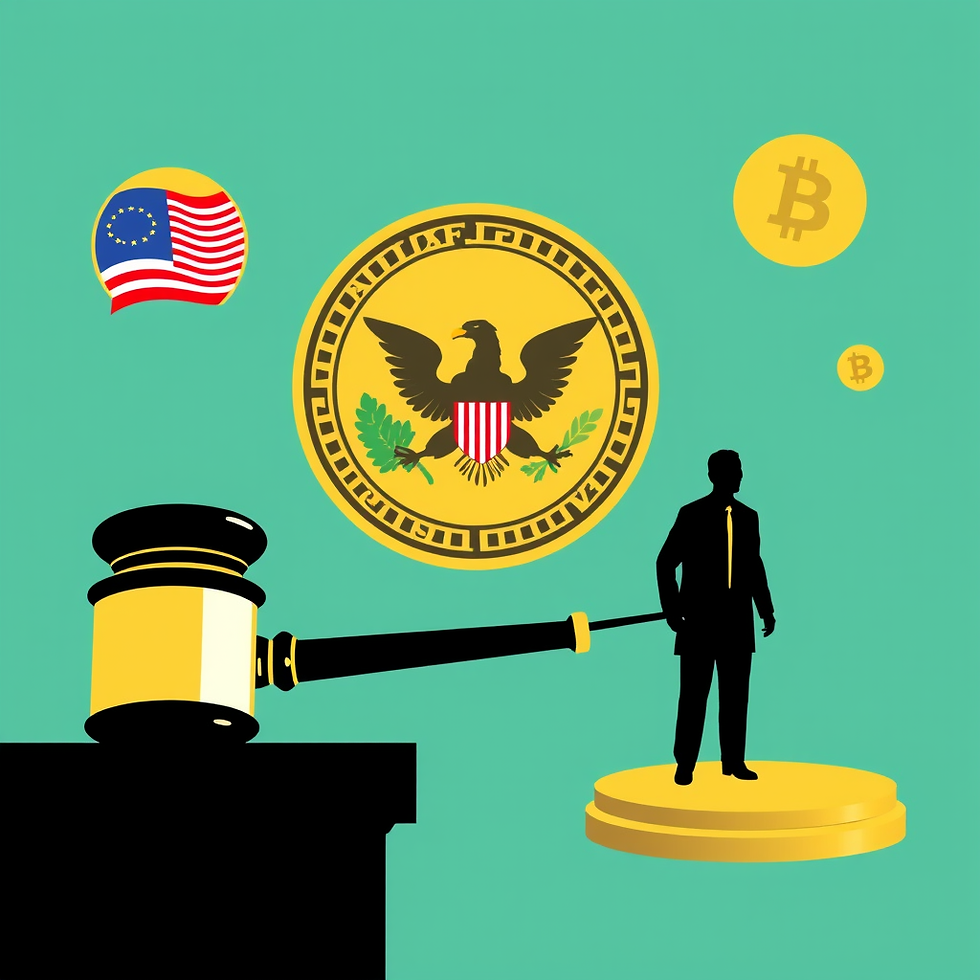
U.S. DOJ Declares 'Code Is Not a Crime' in Landmark Shift
Acting Attorney General Todd Blanche signals a fundamental change in how the Department of Justice approaches blockchain software developers.

Positive
Tuesday, 28 April 2026
SHARE :
SUMMARY
Acting US Attorney General Todd Blanche announced that the DOJ and FBI will no longer target blockchain developers for crimes committed by third-party users of their platforms. The policy shift marks a significant departure from past enforcement actions, including those against Tornado Cash developers, and signals a more developer-friendly regulatory environment under the Trump administration.
In a watershed moment for the cryptocurrency and blockchain industry, Acting United States Attorney General Todd Blanche announced on Monday that the Department of Justice and the FBI will no longer pursue blockchain developers whose software is used by third parties to facilitate illegal activity — provided those developers had no knowing involvement in the crimes.
Speaking at a Bitcoin conference in Las Vegas alongside FBI Director Kash Patel and Coinbase Chief Legal Officer Paul Grewal, Blanche outlined a decisive pivot in federal enforcement philosophy — one that industry observers are already calling a defining moment for crypto's legal landscape in the United States.
A Clear Line Between Developers and Bad Actors
Blanche was unambiguous in articulating the new standard: "The basic principle is that if you are developing software, if you are a coder, if you are part of that process and you are not the third-party user, and you are not helping and knowing the third party is using what you developed to commit crimes, you are not going to be investigated and not going to be charged."
The statement represents a sharp departure from the enforcement posture that defined much of the previous decade. Under prior administrations, federal agencies had pursued aggressive action against developers of privacy-focused protocols, most notably Tornado Cash, the Ethereum-based crypto mixer sanctioned by the Office of Foreign Assets Control in August 2022 for allegedly facilitating money laundering and sanctions evasion.
The Tornado Cash Precedent and What Changes Now
The Tornado Cash case became a flashpoint in the debate over developer liability. Co-founders Roman Storm and Roman Semenov were indicted in August 2023. Storm was subsequently convicted in August 2025, while Semenov remains at large. The sanctions against the protocol were lifted in November 2024, but the legal proceedings cast a long shadow over the developer community.
Blanche's announcement signals that such prosecutions are no longer consistent with the DOJ's current mandate. "We have fundamentally changed the game when it comes to our investigations," he said, adding that the department does not want any platform to view the DOJ or FBI as an adversary.
Industry Welcomes the Shift, But Questions Remain
While the crypto community broadly welcomed the announcement, legal experts cautioned that ambiguity persists. Peter Van Valkenburgh, Executive Director of Coin Center, acknowledged it was "a better message than developers have heard from DOJ in recent years," but noted that the critical question — where exactly the DOJ draws the line between publishing non-custodial software and "helping" or "knowing" about a bad actor — remains unanswered.
Van Valkenburgh pointed to the case of developer Michael Lewellen, who had sued the DOJ seeking pre-enforcement clarity on whether publishing an Ethereum-based crowdfunding tool constituted money transmission. The case was dismissed in late March after a Texas court found Lewellen had failed to demonstrate a credible threat of enforcement — a ruling that, in Van Valkenburgh's view, sits in tension with Blanche's own admission that developers are "sleeping with one eye open."
A Policy Shift Months in the Making
Monday's remarks were not entirely without precedent. In April 2025, Blanche had already issued an internal DOJ memo committing to "ending regulation by prosecution" — a framework under which developers would not be targeted for the actions of users or for unwitting regulatory violations. The Las Vegas conference appearance marks the most public and emphatic articulation of that policy to date.
For a developer community that has long operated under the threat of retroactive prosecution, the message — however imperfect in its legal precision — carries significant weight. Whether it translates into durable legal protections or remains a statement of prosecutorial discretion will likely depend on future court rulings and legislative action.
This content was generated by AI.
related news


RECENT NEWS
The competitive advantage of not knowing you’re wrong
Wednesday

Wednesday
The competitive advantage of not knowing you’re wrong
Wednesday
Wednesday
Gold entered a consolidation phase following the rally seen at the beginning of the week.


Apple Removes Fake Ledger App After $9M Theft
15 Apr 2026
FEATURED ARTICLE
RELATED NEWS

The competitive advantage of not knowing you’re wrong
Wednesday
MiCA Has Made Euro Stablecoins Safe but Structurally Weak
ETHEREUM
Wednesday
The competitive advantage of not knowing you’re wrong
Wednesday
Israel Explores Shekel Pegged Stablecoin BILS Initiative
ETHEREUM
Wednesday
The competitive advantage of not knowing you’re wrong
Wednesday
Justin Sun Sues Over Token Freeze Dispute
ETHEREUM
Wednesday

Gold entered a consolidation phase following the rally seen at the beginning of the week.
PUBLISH
Get your Press Release published on Arkania. Within a Day
Gold entered a consolidation phase following the rally seen at the beginning of the week.
DISCLAIMER :
Content is for informational purposes only and not financial advice. Cryptocurrency investments carry risk. Do your own research before making any decisions.

< HOME - ALL NEWS
Policy
Positive
Tuesday, 28 April 2026
U.S. DOJ Declares 'Code Is Not a Crime' in Landmark Shift
Acting Attorney General Todd Blanche signals a fundamental change in how the Department of Justice approaches blockchain software developers.
SHARE :
SUMMARY
Acting US Attorney General Todd Blanche announced that the DOJ and FBI will no longer target blockchain developers for crimes committed by third-party users of their platforms. The policy shift marks a significant departure from past enforcement actions, including those against Tornado Cash developers, and signals a more developer-friendly regulatory environment under the Trump administration.
In a watershed moment for the cryptocurrency and blockchain industry, Acting United States Attorney General Todd Blanche announced on Monday that the Department of Justice and the FBI will no longer pursue blockchain developers whose software is used by third parties to facilitate illegal activity — provided those developers had no knowing involvement in the crimes.
Speaking at a Bitcoin conference in Las Vegas alongside FBI Director Kash Patel and Coinbase Chief Legal Officer Paul Grewal, Blanche outlined a decisive pivot in federal enforcement philosophy — one that industry observers are already calling a defining moment for crypto's legal landscape in the United States.
A Clear Line Between Developers and Bad Actors
Blanche was unambiguous in articulating the new standard: "The basic principle is that if you are developing software, if you are a coder, if you are part of that process and you are not the third-party user, and you are not helping and knowing the third party is using what you developed to commit crimes, you are not going to be investigated and not going to be charged."
The statement represents a sharp departure from the enforcement posture that defined much of the previous decade. Under prior administrations, federal agencies had pursued aggressive action against developers of privacy-focused protocols, most notably Tornado Cash, the Ethereum-based crypto mixer sanctioned by the Office of Foreign Assets Control in August 2022 for allegedly facilitating money laundering and sanctions evasion.
The Tornado Cash Precedent and What Changes Now
The Tornado Cash case became a flashpoint in the debate over developer liability. Co-founders Roman Storm and Roman Semenov were indicted in August 2023. Storm was subsequently convicted in August 2025, while Semenov remains at large. The sanctions against the protocol were lifted in November 2024, but the legal proceedings cast a long shadow over the developer community.
Blanche's announcement signals that such prosecutions are no longer consistent with the DOJ's current mandate. "We have fundamentally changed the game when it comes to our investigations," he said, adding that the department does not want any platform to view the DOJ or FBI as an adversary.
Industry Welcomes the Shift, But Questions Remain
While the crypto community broadly welcomed the announcement, legal experts cautioned that ambiguity persists. Peter Van Valkenburgh, Executive Director of Coin Center, acknowledged it was "a better message than developers have heard from DOJ in recent years," but noted that the critical question — where exactly the DOJ draws the line between publishing non-custodial software and "helping" or "knowing" about a bad actor — remains unanswered.
Van Valkenburgh pointed to the case of developer Michael Lewellen, who had sued the DOJ seeking pre-enforcement clarity on whether publishing an Ethereum-based crowdfunding tool constituted money transmission. The case was dismissed in late March after a Texas court found Lewellen had failed to demonstrate a credible threat of enforcement — a ruling that, in Van Valkenburgh's view, sits in tension with Blanche's own admission that developers are "sleeping with one eye open."
A Policy Shift Months in the Making
Monday's remarks were not entirely without precedent. In April 2025, Blanche had already issued an internal DOJ memo committing to "ending regulation by prosecution" — a framework under which developers would not be targeted for the actions of users or for unwitting regulatory violations. The Las Vegas conference appearance marks the most public and emphatic articulation of that policy to date.
For a developer community that has long operated under the threat of retroactive prosecution, the message — however imperfect in its legal precision — carries significant weight. Whether it translates into durable legal protections or remains a statement of prosecutorial discretion will likely depend on future court rulings and legislative action.
This content was generated by AI.